

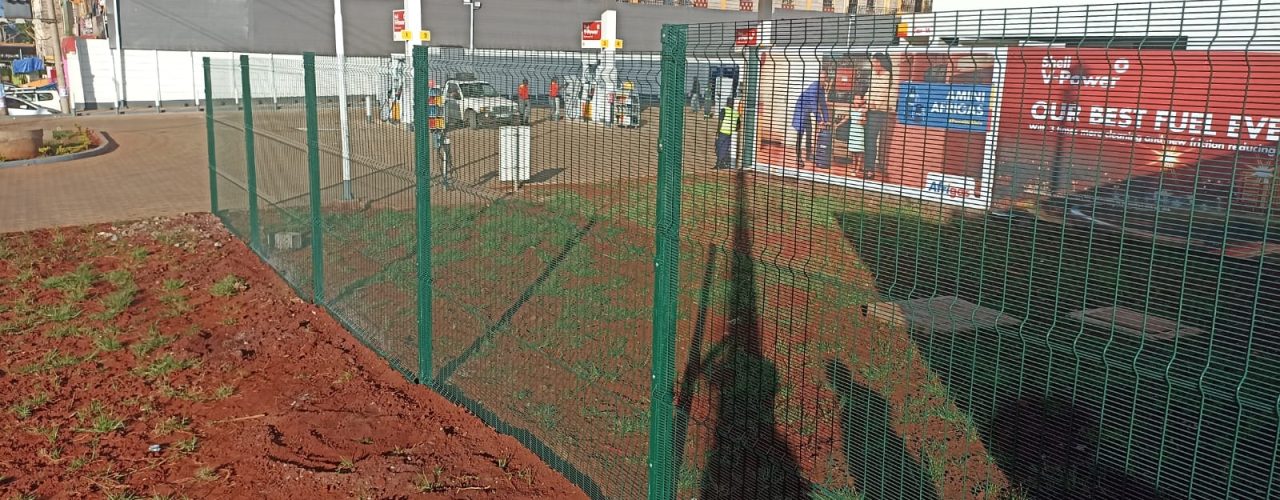
An electric fence is one of the most cost-effective ways to secure a perimeter in Kenya, but the price per metre swings widely depending on the type of fence, the number of strands, the posts, and the energizer you choose. The single biggest factor is whether the fence sits on top of an existing wall or stands on its own posts from the ground up.
This guide gives realistic 2026 cost-per-metre ranges for both, works through what it costs to fence a standard 50 × 100 plot, and explains exactly what should be included in a proper quote. Biosys Kenya installs EPRA-compliant electric fences using Nemtek and Gallagher energizers, and every project starts with a free site survey and Bill of Quantities.
How much does an electric fence cost per metre in Kenya?
As a guide, a wall-top electric fence in Kenya typically costs KES 800 to KES 1,350 per metre installed, because it uses your existing wall as the structure. A free-standing electric fence, which needs its own posts driven into the ground, typically costs KES 1,500 to KES 3,000 per metre installed, with steel-post and high-strand systems at the top of that range. These figures generally include the wire, brackets, insulators, posts (for free-standing), labour, and commissioning; always confirm whether the energizer and razor wire are included in a given quote. The exact price depends on strand count, terrain, and the energizer model.
| Fence type | Typical cost per metre (installed) |
|---|---|
| Wall-top (on an existing wall) | KES 800 – 1,350 |
| Free-standing, wooden post | KES 1,500 – 2,000 |
| Free-standing, steel post | KES 1,800 – 3,000 |
Wall-top vs free-standing: the two main types
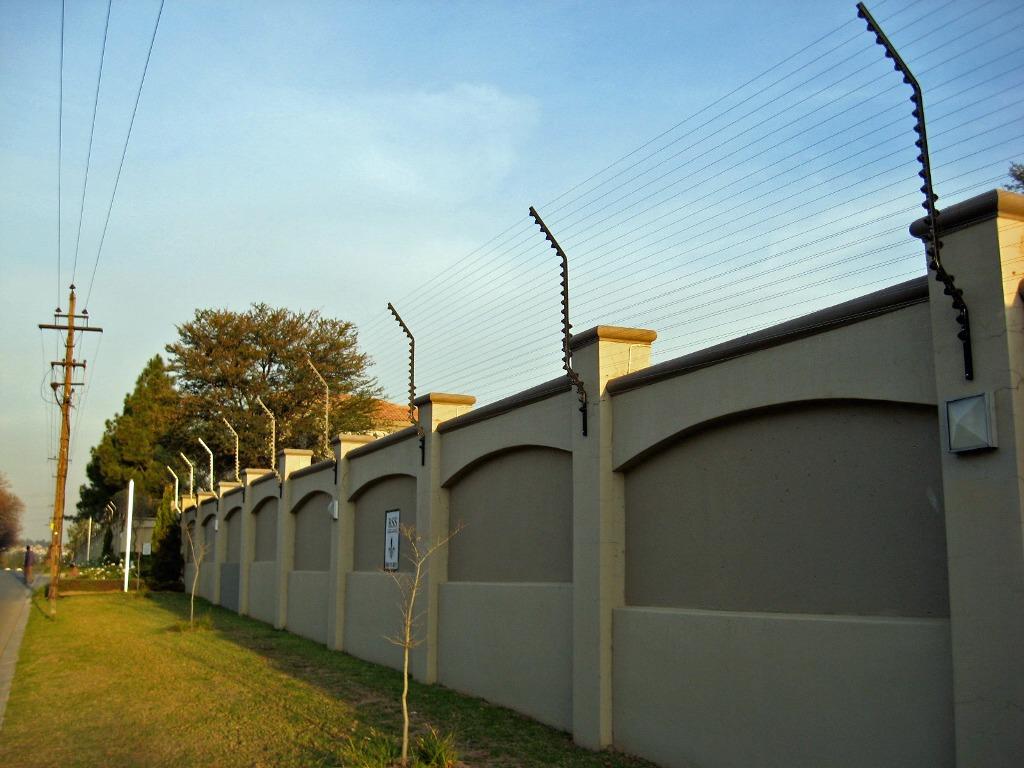
Wall-top electric fence
A wall-top fence mounts on your existing perimeter wall, using brackets and a row of electrified strands above the wall. It is the most popular and most affordable option for urban homes and commercial compounds in Kenya because it reuses the wall you already have. It can be installed with or without razor wire; without it, the look is cleaner, with it, the deterrent is stronger. This is the right choice for most Nairobi properties with a perimeter wall.
Free-standing electric fence
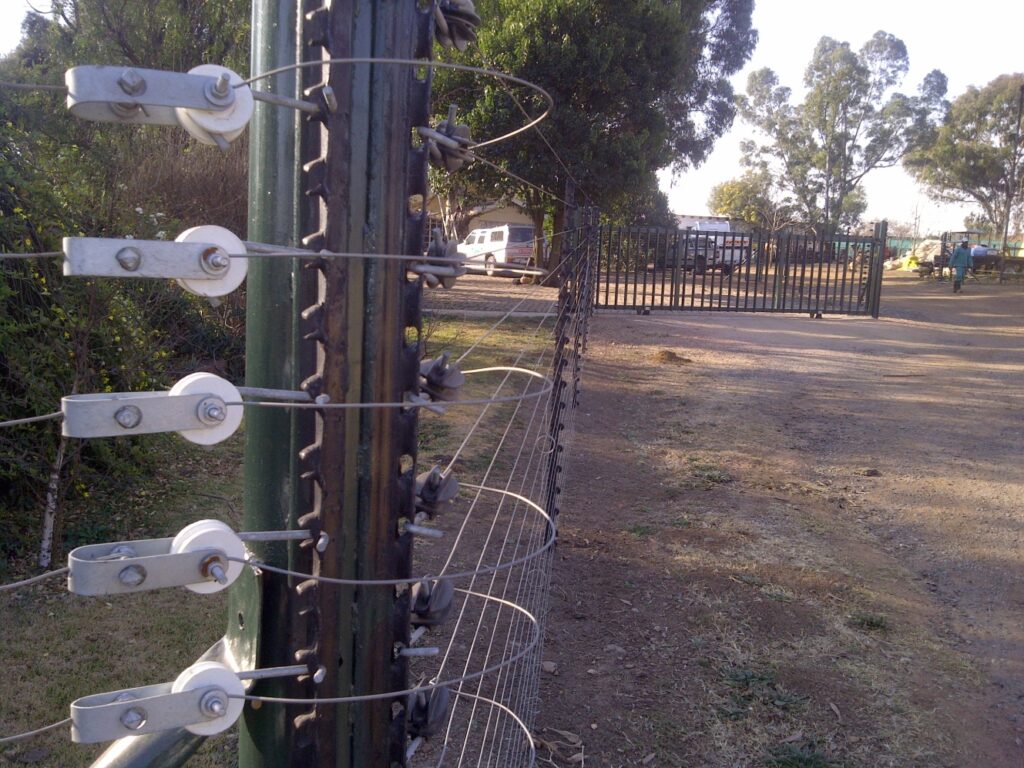
A free-standing fence is built from the ground up: posts are driven into the soil and the electrified strands run between them. It costs more per metre because it includes the posts and the groundwork, but it is the only option where there is no wall — farms, large rural plots, warehouses and open boundaries. You choose between wooden (treated gum) posts, which are more economical, and square-tube steel posts, which last longer and resist tampering but cost more.
How much to fence a 50 × 100 plot in Kenya
A standard 50 × 100 ft plot has a perimeter of roughly 92 metres. For a basic wall-top electric fence, that typically works out to around KES 85,000 to KES 130,000 all-in for a standard system. Adding razor wire, more strands, a premium or solar energizer, or alarm integration pushes the figure higher — fully specified systems with razor wire can reach KES 180,000 or more. A free-standing fence around the same plot costs more because of the posts and groundwork, commonly in the KES 160,000 to KES 240,000 range. These are guideline figures; the exact cost depends on your wall, the number of gates, and the energizer you choose.
What’s included in the Electric Fence price
A complete electric fence installation is more than wire on brackets. A proper quote should include the high-tensile conductor wire, brackets and insulators, posts (for free-standing fences), the energizer, the earthing system, mandatory EPRA warning signage, the alarm/siren where specified, installation labour, and commissioning and testing. The cheapest quote is often the one that has quietly left out the energizer, the earthing, or the compliance signage, so always ask for an itemised Bill of Quantities and compare quotes on the same specification.
How strand count and posts change the cost of Electric Fence Installation
More strands mean more wire, more insulators, and more labour, so an 8-strand fence costs less per metre than a 12- or 15-strand one. Residential wall-top fences are commonly 8 to 12 strands; high-security and farm fences use more. Post choice matters too: on free-standing fences, treated wooden posts are cheaper up front, while steel posts cost more but last longer and resist tampering. Terrain is the hidden variable – rocky ground or sloped boundaries take longer to install and raise the labour cost.
Energizer, solar power, and running costs of Electric Fencing
The energizer is the heart of the fence; it sends the short, non-lethal pulse along the wires. Biosys Kenya uses Nemtek and Gallagher energizers for reliability and local spares support. In areas with frequent KPLC outages, a solar-powered energizer with battery storage keeps the fence live off-grid; it costs more up front but removes the electricity bill and the outage risk. Running costs are low either way: a typical 50 × 100 wall-top fence on mains power uses only about KES 300 to KES 500 of electricity per month.
EPRA compliance: the cost you can’t skip
In Kenya, electric fences are regulated. Under the Energy (Electric Fencing) Regulations, an electric fence must be installed by an EPRA-registered contractor and must display the mandatory yellow warning signs along its length. These are legal requirements, not optional extras, and a quote that ignores them is not a complete quote. Biosys Kenya handles the compliance paperwork and signage as part of every electric fence project, so your installation is legal from day one. (For the full rules, see our guide to electric fence permits and EPRA regulations in Kenya.)
What affects the price of an electric fence in Kenya
The main cost drivers, in rough order of impact:
- Wall-top vs free-standing: free-standing costs more because of posts and groundwork.
- Perimeter length: the longer the fence, the lower the cost per metre tends to be.
- Strand count: more strands, more materials and labour.
- Post type: steel costs more than wood but lasts longer.
- Energizer and power: premium or solar energizers add to the up-front cost.
- Extras: razor wire, alarm integration, and CCTV linkage all add cost.
- Terrain and gates: rocky or sloped ground and multiple gates raise labour.
Frequently Asked Questions on Electric Fence Installation in Kenya
How much does an electric fence cost per metre in Kenya?
A wall-top electric fence in Kenya typically costs KES 800 to KES 1,350 per metre installed, while a free-standing fence costs KES 1,500 to KES 3,000 per metre because it needs its own posts. The exact price depends on strand count, post type, terrain and the energizer model.
How much does it cost to fence a 50 by 100 plot in Kenya?
A basic wall-top electric fence around a 50 by 100 plot (about 92 metres) typically costs KES 85,000 to KES 130,000 all-in. Adding razor wire, more strands or a solar energizer raises the figure, and a free-standing fence on the same plot generally costs KES 160,000 to KES 240,000.
Which is cheaper, a wall-top or free-standing electric fence?
Wall-top is cheaper because it uses your existing perimeter wall as the structure. Free-standing fencing costs more per metre because it includes posts and groundwork, but it is the right choice where there is no wall, such as farms and open plots.
Do I need an EPRA permit for an electric fence in Kenya?
Yes. Under Kenya’s Energy (Electric Fencing) Regulations, an electric fence must be installed by an EPRA-registered contractor and must display mandatory yellow warning signs. Biosys Kenya handles the compliance documentation and signage as part of every installation.
Is a solar electric fence more expensive in Kenya?
A solar-powered energiser costs more up front than a mains one, but it removes the electricity bill and keeps the fence live during KPLC outages. For rural sites or areas with frequent power cuts, it often pays for itself over time.
How much does it cost to run an electric fence per month in Kenya?
Running costs are low. A typical 50 by 100 wall-top fence on mains power uses only about KES 300 to KES 500 of electricity per month. A solar-powered fence has effectively no electricity cost once installed.
How to get an accurate quote on Electric Fence Installation in Kenya
Because length, fence type and terrain change the price so much, the most reliable way to budget is a free site survey with an itemised Bill of Quantities. A Biosys Kenya technician measures your perimeter, recommends the right strand count and energizer, and gives you a clear, no-obligation quote that already includes EPRA compliance. To book, call or WhatsApp +254 722 967544, WhatsApp +254 733 516965, or email info@biosyskenya.com. See full details on our electric fence installation service page.
